02.03.2026
Do You Need Vaccinations for the Dominican Republic?
Digital nomads, long-term travelers, and families with young children — this one's for you!
Planning a longer stay in the Dominican Republic, exploring rural areas, or even thinking about settling here? In this article, we break down what you need to know — from recommended vaccines to mosquito protection and medical care on the island.
What's Mandatory and What's Recommended?
No vaccinations are mandatory for entry into the Dominican Republic. That said, some are worth considering depending on your lifestyle, travel plans, and personal health history.
Recommended Vaccinations
Hepatitis A & B - Hepatitis A and B are infectious liver diseases transmitted through contaminated food, water, or blood.
Hepatitis A: 2-dose vaccine
Hepatitis B: 3-dose combined vaccine (can be given as a combined Hep A+B vaccine)
Typhoid - Typhoid is a bacterial disease spread through contaminated food and water. The vaccine is given as a single dose, at least 14 days before travel, and provides protection for up to 3 years.
Tetanus, Diphtheria & Whooping Cough - These are standard vaccinations that everyone should be up to date on.
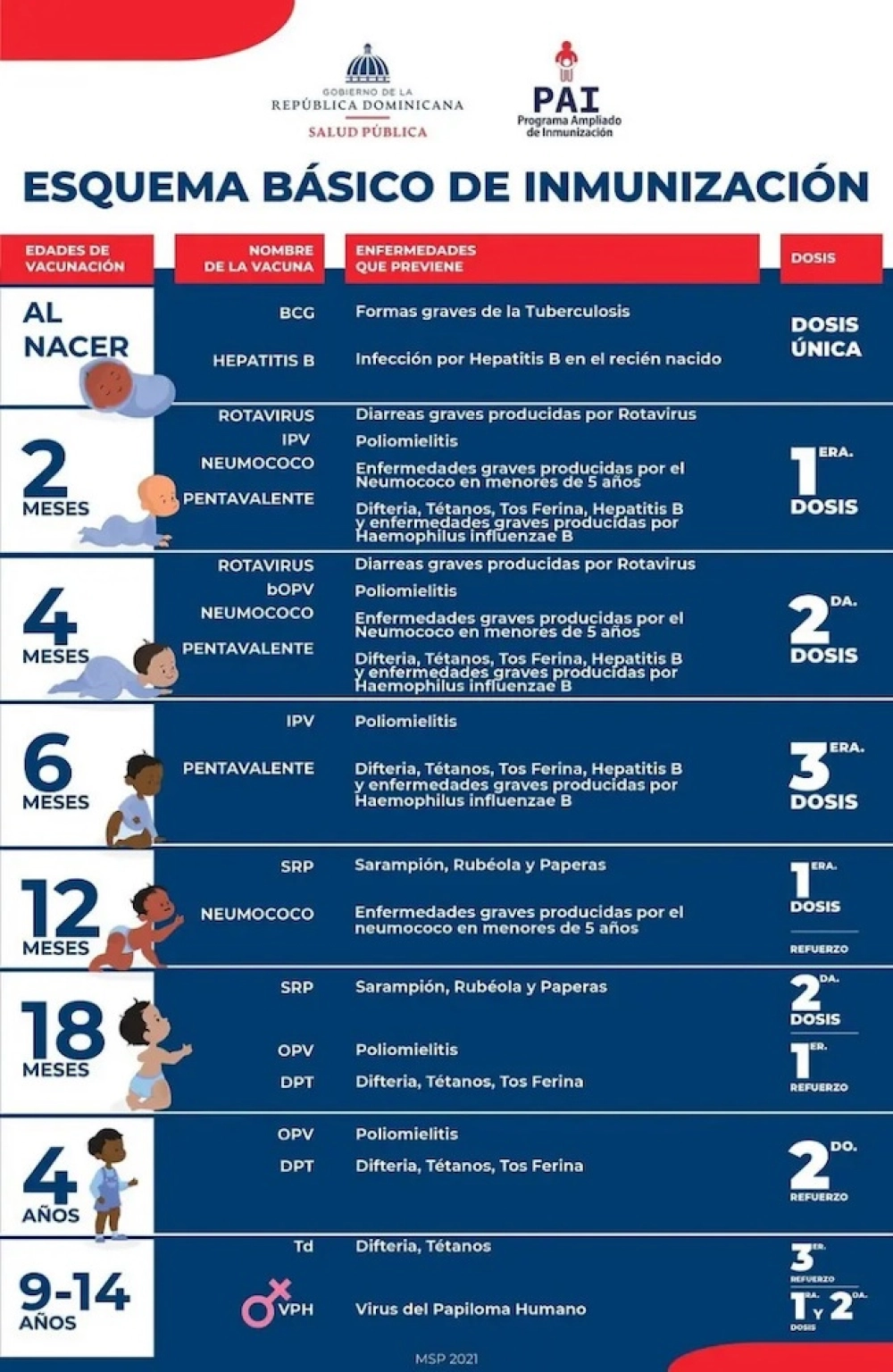
Childhood Vaccination Schedule in the Dominican Republic
For families planning a longer stay or relocating with children, it’s helpful to know how the local system works. In the gallery below, you can find the current Basic Immunization Schedule issued by the Ministry of Public Health of the Dominican Republic.
Overall, the Dominican vaccination schedule follows World Health Organization (WHO) guidelines and is broadly in line with immunization programs used in the US, Canada, and Europe — so if your child is up to date with their vaccines at home, they'll most likely be covered here too. You can also check your child's records with a local pediatrician after arrival.
Additional Vaccinations to Consider
Rabies - If you plan to spend a lot of time outdoors, in nature, or around local animals, vaccination against rabies is worth considering. The course consists of 3 doses.
Yellow Fever - The Dominican Republic is not a yellow fever zone. However, if you're traveling from a country where yellow fever is present, proof of vaccination may be required upon entry.
For reference: the yellow fever vaccine is given as a single dose at least 10 days before entering an endemic area and provides lifelong protection.
⏰ Timing matters: If you decide to get vaccinated, plan ahead. Depending on the vaccine, you may need to start 2 weeks to 6 weeks before your departure. Also keep in mind that some diseases have an incubation period of up to 24 days — so monitor your health even after returning home, and seek medical attention at the first sign of illness.
Mosquito-Borne Illnesses — No Vaccine, But Prevention Is Key
Dengue fever is the primary concern in the Dominican Republic — cases are reported regularly, particularly during the rainy season. Chikungunya has also been recorded on the island. There are no vaccines widely available for travelers against these diseases, so prevention is your best protection:
Use insect repellent regularly
Sleep under a mosquito net if staying in open or rural accommodations
Wear light long-sleeved clothing in the evenings — mosquitoes are most active in the morning and after 6 PM
- Use fans — even in outdoor areas — as air movement helps deter mosquitoes
Don't be overly alarmed though — not every mosquito bite is dangerous. Dengue is only transmitted by infected female Aedes aegypti mosquitoes, and not all of them carry the virus.
Travel Health Insurance
Whatever your travel plans, having travel health insurance is a standard precaution. Medical care in the Dominican Republic can be costly, particularly at private facilities. If you're planning any water sports or adrenaline activities, it’s worth checking with your provider to see how these are handled under your specific plan.
First Aid Kit — What to Pack
It's always a good idea to bring a basic first aid kit. It might include:
Anti-diarrheal medication
Pain relief (e.g., Paracetamol or Ibuprofen)
Insect repellent
High-SPF sunscreen
Waterproof plasters/bandages
Any personal prescription medications
Good news — pharmacies in the Dominican Republic are well-stocked and you can easily find common medications like Paracetamol or Ibuprofen locally. Even better, many medications are sold per tablet, so you don't need to buy a whole pack. The two largest pharmacy chains in the Dominican Republic are Farmacia Carol and Los Hidalgos, with branches across the country. In most cities, at least one Farmacia Carol location is open 24/7.
Should You Consult a Doctor Before You Go?
It really depends on your trip:
Staying at a hotel resort with standard facilities? Health risks are minimal and vaccinations are not something most travelers should worry about.
Planning a longer stay, exploring rural areas, traveling with young children, or continuing on to other Central or South American countries? Consulting your doctor or a travel medicine specialist before departure is a good idea.
✅ Summary
No vaccinations are required to enter the Dominican Republic
Recommended vaccines: Hepatitis A & B, Typhoid, Tetanus
Protect yourself against mosquitoes — dengue fever poses a year-round risk in the Dominican Republic
Travel health insurance is strongly recommended
Pack a basic first aid kit — pharmacies are well-stocked locally
For longer stays or off-the-beaten-path travel, consult a travel medicine specialist
Disclaimer: This article is for informational purposes only and does not constitute medical advice. Always consult your doctor or a qualified healthcare professional before traveling.
Ready to explore the Dominican Republic? Discover local experiences, tours, and transport at papayaguide.com.